


December 6, 2023

Happy Holidays!

Author

Holly Stickley

Update First Last in Content -> Business Text -> First Last field

Date

December 6, 2023

Share

"It's not how much we give, but how much love we put into giving."
Mother Teresa

Snowy park path with trees and benches, overlaid with “Merry Christmas” text

Happy Holidays Family & Friends,

Well here we are again, one year older, one more trip around the sun, and we’re back into the holiday hubbub—can you believe it? In this last year, our little landscape company had its busiest year ever. We are so grateful to all our many wonderful clients, who we enjoy collaborating with, and who have become a part of The White Pear family. 

For this winter newsletter, we’ve put together some fun facts about a well known holiday tradition, winter tips for the garden, and one of our favorite holiday dessert recipes. We hope this newsletter will be helpful, inspiring, and if nothing else, entertaining. Forward this to family or a friend, if you like, and wish them a happy holiday.

Here’s to a loving and peaceful celebration to bring in a new year full of joy and beauty in your home, in your garden, and for all humanity. 🕊


Mistletoe

Two people in Santa hats kissing beneath mistletoe with holiday lights in the background

It is said, that a man was allowed to kiss any woman standing underneath the mistletoe, and that bad luck would curse any woman who denied him. With each kiss, a berry was to be plucked from the mistletoe, and the kissing wouldn’t stop until after all the berries were picked. 

And, let’s not forget the annual office Christmas party, were said mistletoe would create a means to get to know, more intimately, a potential partner. 

The word mistletoe comes from the now obsolete Anglo-Saxon dialect. Apparently the old Anglos noticed that this plant would often sprout from bird droppings or dung on trees. Their word for dung is mistle. So they combined mistle with their word for twig, which was tan, and they came up with the word mistletan, which eventually would become mistletoe, as we know it today—did you get all that?😊

Some mistletoe is considered bad for trees and plant life, while other varieties provide food for various animals, who eat the leaves and young shoots, while distributing pollen and seeds as they dine.

Remember the Pagans? Since the seeds resembled semen, the Pagans regarded the white berries as a symbol of male fertility. The Ancient Greeks referred to mistletoe as "oak sperm," and the Romans associated mistletoe with peace, love, and understanding, and hung it over doorways to protect the household.

Later on in the Christian-Western world, mistletoe became associated with Christmas, providing protection from witches and demons, and as a decoration under which lovers were expected to kiss. The middle class of Victorian England was responsible for continuing this kissing tradition. 

Every year, the UK town of Tenbury Wells holds a mistletoe festival and crowns a ‘Mistletoe Queen'.  There are 1500 varieties of mistletoe. 🌿


9 Winter Tips for the Garden

So you’re standing on your porch looking out on your front yard, and besides the colorful Christmas lights hanging off the gutters, your yard looks like crap! So what to do? During the winter, my goal is always to make my garden look as neat and clean as possible, which in itself is beautiful. There’s nothing wrong with negative space, and with well-placed evergreens the stage is set for the upcoming spring show of color and beauty. Here are a few tips… 

1. Protect Your Trees 
In the wintertime young ornamental trees with thin bark can be susceptible to sunscald. Sunscald is the death of bark tissue due to high temperatures. In winter, sunscald happens from rapid fluctuations in temperature. Bark that freezes in on the south and southwest sides of the tree thaws in the sun and then quickly refreezes in the evening, or as the sun is blocked by cloud cover. A best way to protect the trunk is to use a light colored fabric wrap to reduce rapid temperature changes.

2. Know Your Hardiness Zone
Do plants seem to disappear in your garden, not growing back the next year or have trouble with plants dying? Making sure you are choosing hardy plants for your region is easy to do. Most plants for sale have a tag that contains the USDA hardiness zone. In the greater Portland and Vancouver areas our USDA hardiness zone is 8b. The average low temperatures being from 15-20 degrees. Depending on your exact location and micro-climates, weather may be more harsh as cold and heat extremes become more unpredictable. At the White Pear, in general, we like to use reliable plants that are hardy to zone 7— 0-10 degrees.

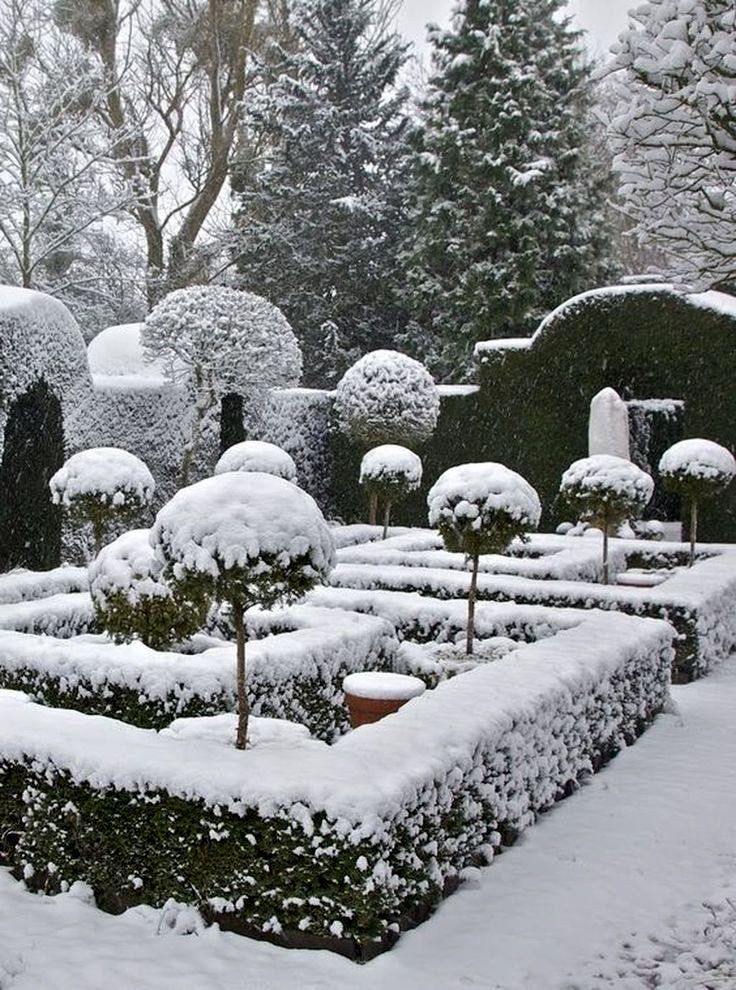
Snow-covered formal garden with trimmed hedges, round topiary, and trees in winter.

3. Salting Roads and Walkways
Salt that gets washed away into the soil inhibits the uptake of water in most plants, so if you are worried about any prized or sentimental shrub, be cautious of getting salt around the roots, or use a deicer which is safe for plant material.

4. Prune Your Trees
Trees go dormant in the winter making it a great time to prune. The loss of leaves on deciduous trees makes it easy to see the branching structure and any dead or damaged wood.

5. Add Lighting
As the days get shorter and colder, outdoor lighting can really bring life back into your landscape. Uplights on trees, lights around paths, and even fence or wall lights is a great way to continue enjoying your garden during this time of year.

6. Add Color
Colorful pots, trellises, benches, and garden decor adds an interesting structural element to a changing winter landscape.

7. Pergola and Fire Pits
Expand your use of the garden into the colder months with a covered pergola or fire pit. Cozying up to an outdoor fire as the temperature drops, or outfitting your pergola with heaters is a great way to continue your time outdoors.

8. Deer Resistant
As the winter months go on and food sources for wildlife such as deer dwindle, you may have a problem with deer snacking on your plants. Although there are many methods for deer proofing your garden, the best practice is to pick plants that deer dislike such as lavender, boxwood, ninebark, and ferns. Deer dislike anything with aromatic foliage or fuzzy and spiny textures.

9. Add Winter Flowering Shrubs and Trees
Camellias, witch hazels, and hellebores, are great plants that add color to the garden this time of year. Annuals such as violas and pansies are frostproof and can be planted in beds and planters to add color and interest until your bulbs and perennials emerge in the spring. 🌷


Suzie’s Plum Tart

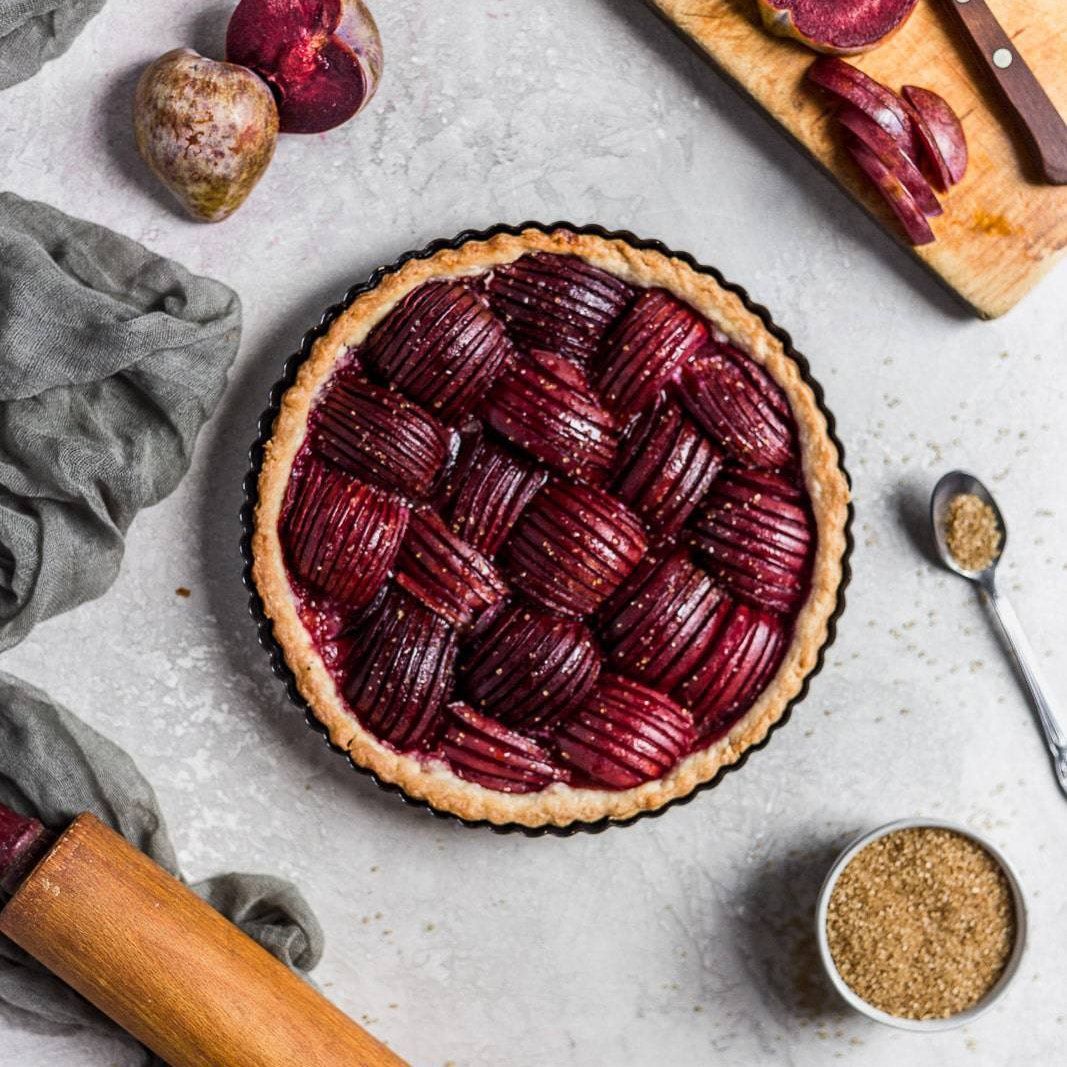
Round plum tart with lattice top on a gray surface, surrounded by plums, spoon, and baking tools.

To celebrate the holidays, every second Saturday in December, my husband and I get together with a large group of friends called the Spice/Bison—some in this group have been friends for over 40 years—Fred and I are newbies at 20 years. It’s always a rockin’ time with great food, live music, and lots of laughter. Last year, our dear friend Suzie brought her fabulous plum tart—it was to die for. She was kind enough to share it here with The White Pear family. Maybe it will become a new tradition in your home. To print this recipe, go to file and export as a PDF.

1 8-ounce package of cream - cheese softened

2 eggs

1 cup sugar

1/4 teaspoon almond extract

1/4 teaspoon ground cinnamon

1 cup water

12 purple prune plums halved and pitted

TART SHELL:

1 1/2 cups flour

1 tablespoon sugar

1/8 teaspoon salt

1/2 cup softened butter

1 egg yolk

1/4 teaspoon vanilla

2 to 3 tablespoons water

To make tart shell, combine flour, sugar and salt. Beat butter and egg yolk together; work into flour. Add vanilla and 2 to 3 tablespoons water to form a ball. Dust with flour, wrap in waxed paper or plastic wrap and refrigerate about 30 minutes. Roll dough on lightly floured surface and fit into a 9-inch tart pan with removable bottom. Trim excess dough. Prick shell with fork. Bake at 400 degrees 15 minutes or until slightly brown. Cool.

Combine cream cheese, eggs, 1/2 cup sugar, almond extract and cinnamon; mix until smooth. Pour into tart shell. Bake at 375 degrees 15 minutes or until set. Cool. Bring water and 1/2 cup sugar to boil; add plums and simmer about 30 seconds or just until tender. Remove plums with slotted spoon, drain and cool. Continue boiling syrup until thickened or volume is reduced to one-third. Cool. 

Arrange plums on baked cheese filling. Spoon glaze over plums. Makes 8 to 10 servings.


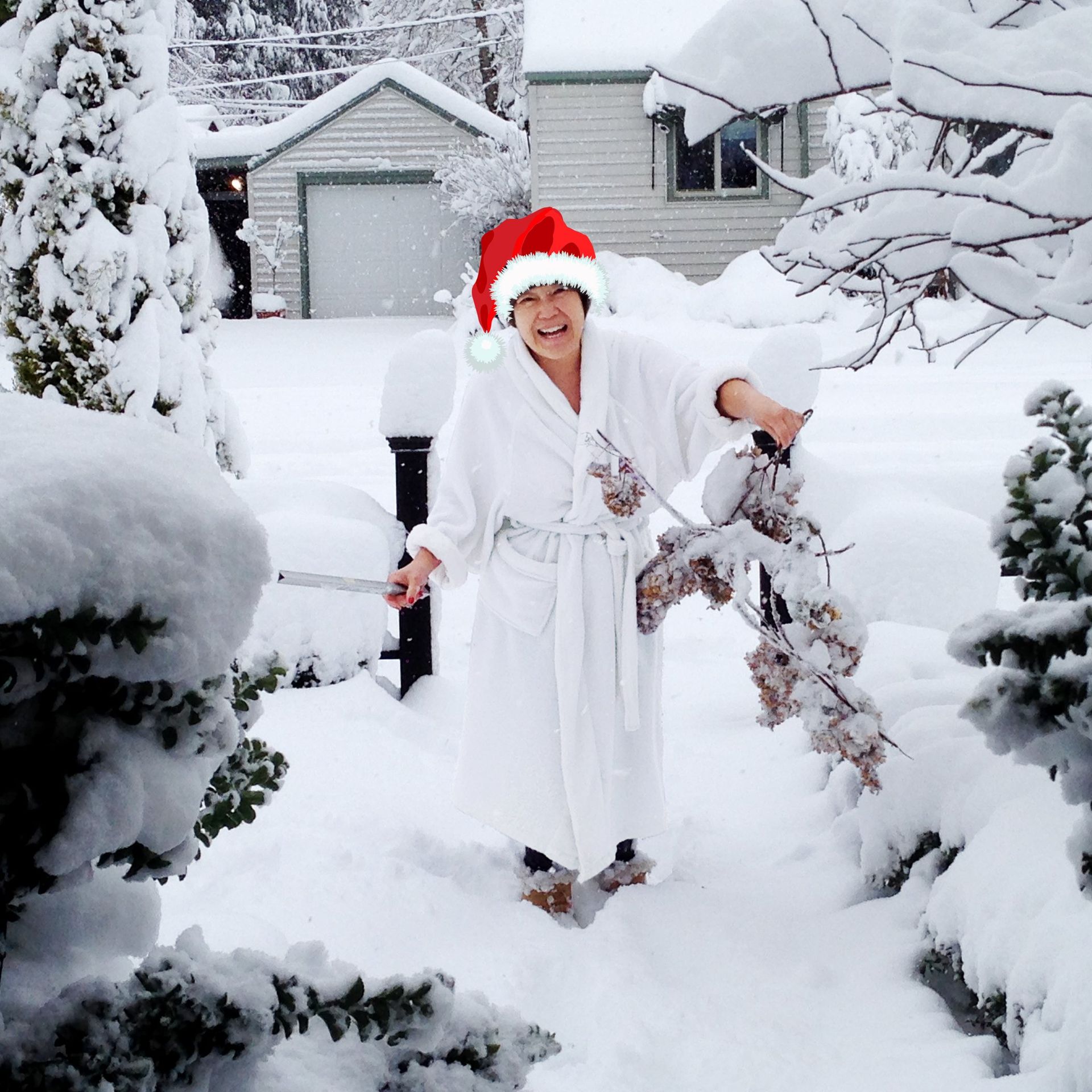
Person in a Santa hat standing in deep snow between snow-covered bushes and houses, smiling.

Happy Holidays Everyone!
Enjoy, and as always love hearing from you!
Till the next time...
Love, Holly ~ Your Queen Bee at The White Pear
   

Winter village scene with snow-covered houses, trees, and people; text reads “The Winter Season.”
By Holly Stickley • January 19, 2026
I hope you are enjoying these brisk, sunny winter days, here in the Pacific Northwest. We have a lot of cloudy days, so sunshine always makes me happy🌞!  I’m hoping for a mild winter, but February usually brings us snow down to the lower levels. Check out my 10 Winter Landscaping Tips: 

Canal beside old brick building and chimney; person walking along stone path under a cloudy sky
By Holly Stickley • August 13, 2025
Here is our second mini-video installment from our summer trip to the UK, featuring Hidcote Manor Garden in the Cotswolds, England. Hidcote Manor Garden is a world-famous Arts & Crafts inspired garden, designed by Major Lawrence Johnson, set against the backdrop of the rolling hills of the North Cotswolds countryside.

Person standing by a bench in a lush garden with yellow flowers and a green ivy wall.
By Holly Stickley • July 30, 2025
Hello Garden Friends! I hope you’re all having a fabulous summer. I just returned from a garden / graduation trip to the UK, and I’d like to share with you a bit of the Scottish culture with short video of my nephew’s graduation from the University of St. Andrews in Scotland. A very special day for my family and our friends.

Two people smiling on a couch outdoors, wearing straw hats and light summer clothes.
By Holly Stickley • April 24, 2025
If you were wondering if you could grow palm trees in the Pacific Northwest, yes you can! Windmill Palms are a classic palm in the Pacific Northwest. They are cold-hardy to 10 degrees and short drops to zero degrees. Windmill Palms thrive in zones 7 to 11.Their trunk is covered in fur and acts like an insulation to protect the interior from the cold.
By Holly Stickley • February 1, 2025
Hello Garden Friends! If any of you are wondering if you can plant in the winter, yes you can! You can plant in the winter, as long as what you’re planting is hardy for your planting zone. When the ground is frozen, what we do at The White Pear is use a pickaxe to break up the soil, dig out the appropriate size planting hole, fill with good blended soil, plant, and mulch with 2-3 inches of compost. Last fall, we had the pleasure of designing a landscape on a hilltop in the Dundee, Dayton wine producing region of Oregon. The 360 degree views were stunning.

Autumn forest path with white script reading “Around for the Fall”
By Holly Stickley • September 26, 2024
Installing a garden in the fall offers numerous advantages. Cooler temperatures, less plant stress, and the soil is still warm enough to encourage root growth. Additionally, fall planting allows plants to establish themselves before the heat of summer, leading to healthier, more resilient gardens. And, it’s also just a lovely time to be outdoors in the mild weather. Fall is my husband’s favorite time of the year, but I’m guessing it’s more for football, and not gardening…

Pink and orange flowers with overlaid text reading “Spring is Here”
By Holly Stickley • February 17, 2024
After months of rain, snow, wind, and ice, early spring is the ideal time to walk your landscape and assess tree health. Broken or damaged branches should be removed for safety and plant vitality, and if you haven’t yet pruned for shape, do it now before foliage fills in. Keep an eye on the forecast, as a late frost can still catch new growth off guard, protect tender buds with mulch, frost cloth, or by bringing potted plants indoors.

Sunlit autumn forest with golden leaves carpeting the ground and tall trees glowing in warm light
By Holly Stickley • September 27, 2023
It’s the new Flora Grubb Gardens in L.A.! I was thrilled to spend time with Flora, who I’ve been following online for a number of years. Flora showed me around, while my husband Fred shot a video. Check it out. There are many resources available for purchasing tulip bulbs. I like to purchase for myself and for my clients online at Dutch Grown. Spending evenings with my laptop, a glass of prosecco, and drooling over all the choices is my happy place! Many local nurseries also carry bulbs this time of year. However you buy your bulbs, be picky!
Two people in straw hats standing in a sunny garden, facing a lush flower bed and greenery.
By Holly Stickley • July 27, 2023
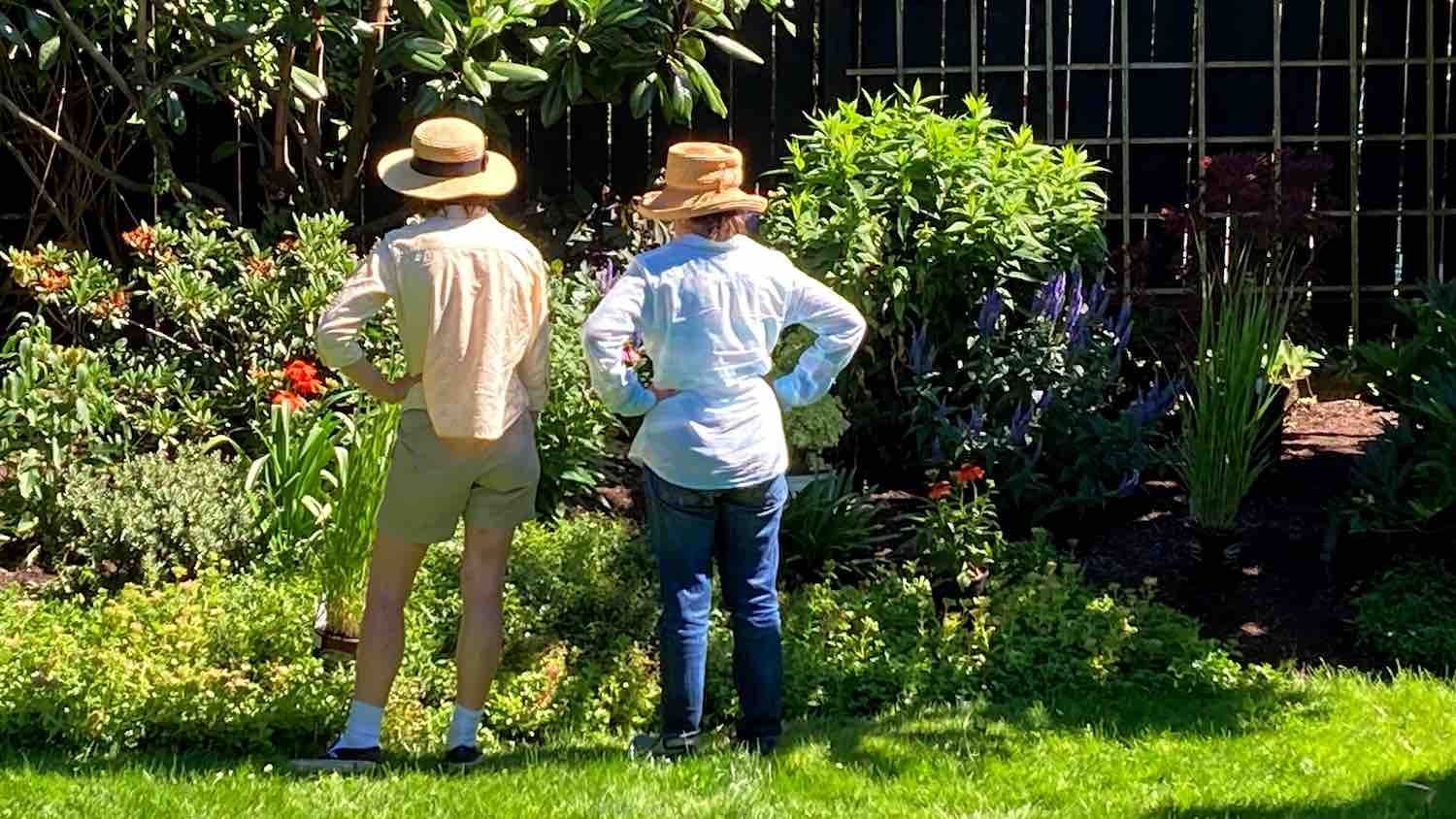
We’ve all heard of “auto detailing.” Well…instead of auto, think garden. We are introducing a new concept in landscape maintenance, “The Garden Detail.” For some of us, “mow & blow” just ain’t gonna cut it. 30 minutes of loud mowers and blowers is pure misery for you, and your neighbors. But, just to be clear, mowers and blowers are a necessity, but here at The White Pear we take time for the finer details. Does a 30 minute visit from your neighborhood mow & blow outfit get into all those tiny little nooks and crannies?